Coastal Corrosion and Waterproofing - The Saltwater Factor
Coastal properties require specialized waterproofing materials. Learn how salt air accelerates structural decay and why standard sealing methods fail near the ocean.

May 25, 2026
Insights
Insights
From Camps Bay to Muizenberg, coastal properties in Cape Town endure a harsh atmospheric mix of high humidity, intense UV radiation, and airborne sea salt.
Salt is highly hygroscopic—meaning it naturally attracts and holds moisture. When salt spray settles into porous building materials like concrete and brick, it sets off a destructive cycle that threatens the structural integrity of your building.
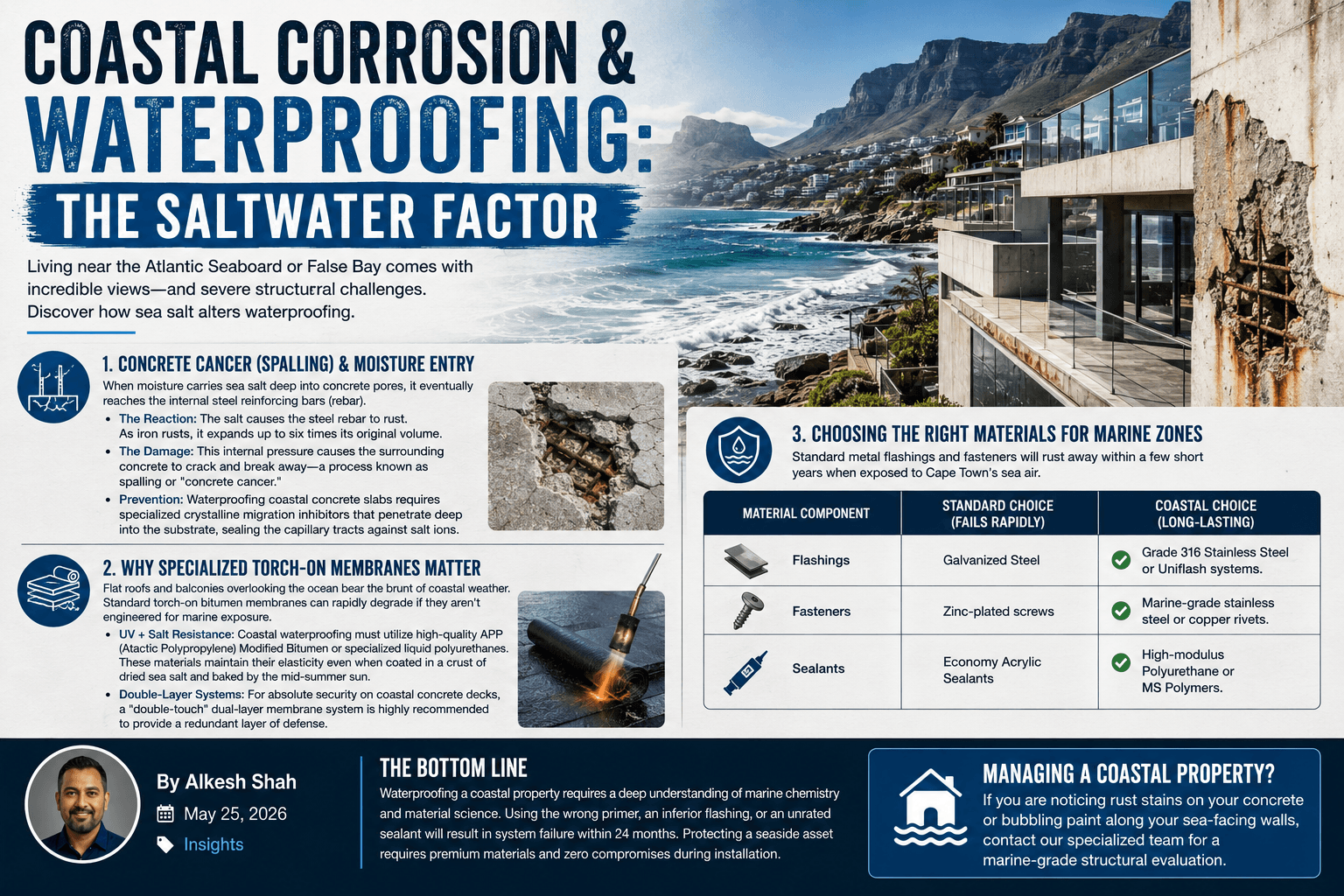
When moisture carries sea salt deep into concrete pores, it eventually reaches the internal steel reinforcing bars (rebar).
Flat roofs and balconies overlooking the ocean bear the brunt of coastal weather. Standard torch-on bitumen membranes can rapidly degrade if they aren't engineered for marine exposure.
Standard metal flashings and fasteners will rust away within a few short years when exposed to Cape Town's sea air.
| Material Component | Standard Choice (Fails Rapidly) | Coastal Choice (Long-Lasting) |
|---|---|---|
| Flashings | Galvanized Steel | Grade 316 Stainless Steel or Uniflash systems. |
| Fasteners | Zinc-plated screws | Marine-grade stainless steel or copper rivets. |
| Sealants | Economy Acrylic Sealants | High-modulus Polyurethane or MS Polymers. |
Waterproofing a coastal property requires a deep understanding of marine chemistry and material science. Using the wrong primer, an inferior flashing, or an unrated sealant will result in system failure within 24 months. Protecting a seaside asset requires premium materials and zero compromises during installation.
Managing a Coastal Property? If you are noticing rust stains on your concrete or bubbling paint along your sea-facing walls, contact our specialized team for a marine-grade structural evaluation.