The Hidden Cost of Ignoring Early Warning Signs
Most ceiling collapses in the Western Cape don't happen overnight. They start as a single hairline crack in a parapet wall in autumn, soak insulation through one wet winter, rot the timber by the next spring, and finally show themselves as a sagging ceiling 18 months later — long after the repair could have been simple.
The good news? Waterproofing failure almost always announces itself. You just have to know what to look for.
6 Early Warning Signs Homeowners Routinely Ignore
1. Faint Brown Staining on Ceilings
A pale ring or halo on a white ceiling is the most overlooked warning sign in South African homes. Owners often dismiss it as old paint discolouration. It isn't. It's the dried mineral residue from water that's been quietly tracking through your roof structure for weeks.
2. White Powdery Deposits on Brick Walls (Efflorescence)
Those white salty patches on exterior or interior face brick mean water is moving through the brick and depositing dissolved salts as it dries. It's a direct signal your wall is no longer being kept dry.
3. A Persistent Musty Smell After Rain
Mould only grows where moisture sits. If a room smells damp for 24+ hours after rainfall, water is trapped somewhere — typically inside the ceiling void or behind a wall.
4. Paint Bubbling, Blistering or Flaking
Paint blisters because moisture is pushing it off from underneath. By the time you see this, your wall has been wet for a while.
5. Cold or Damp Patches on Internal Walls
Run your hand along walls near windows, chimney breasts, and external corners. A patch that's noticeably colder or damp-feeling indicates active moisture ingress.
6. Ceiling Discolouration Around Light Fittings
Water naturally follows the path of least resistance — usually down a light cable. Yellowing or brown rings around downlighters are a near-certain sign of a roof leak directly above.
Why Small Parapet Cracks Escalate Fast in Cape Winters
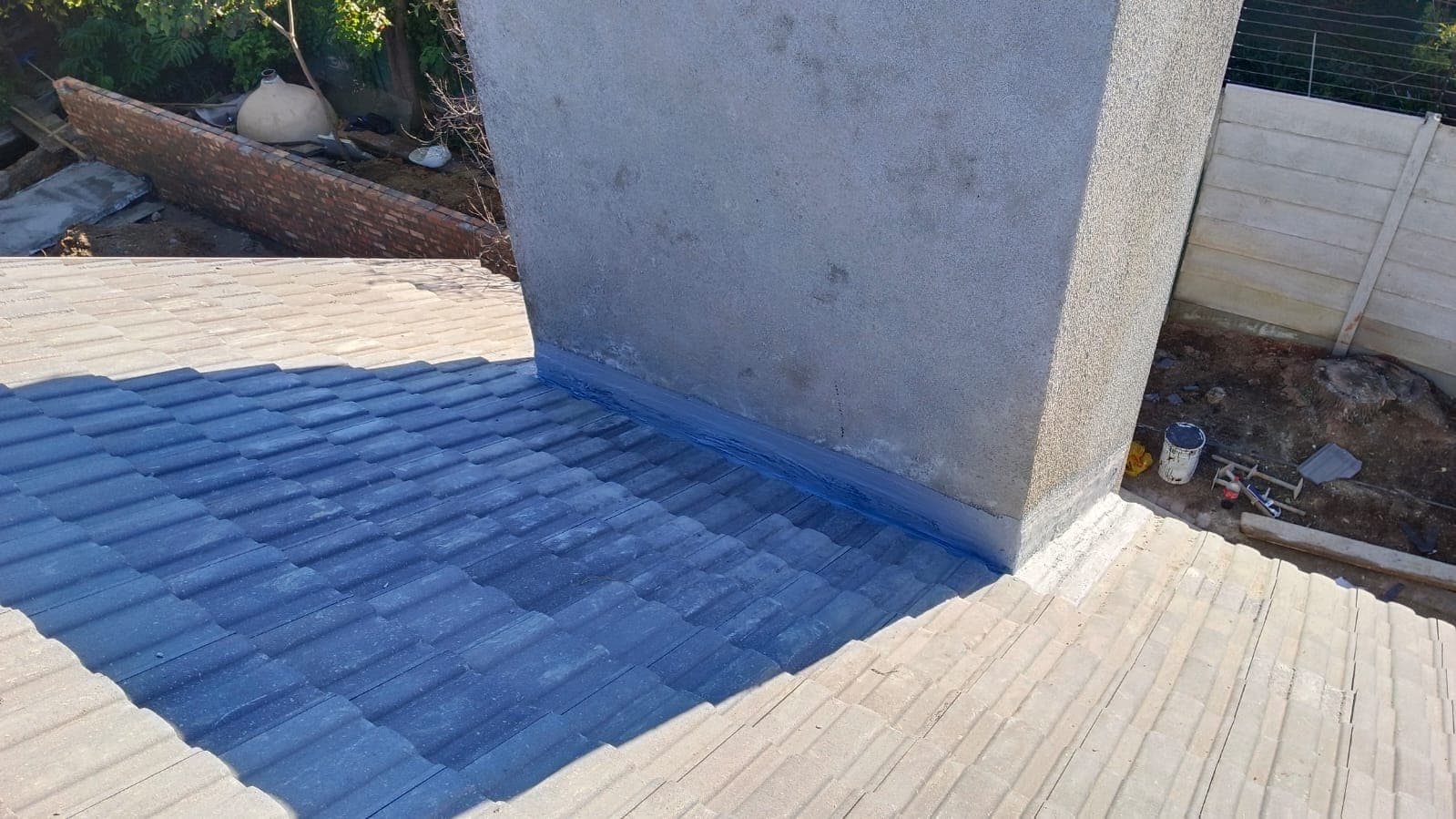
Parapet walls — the low walls along the edges of flat or near-flat roofs — are the most common failure point in Western Cape homes. Here's the brutal cycle:
- A hairline crack opens in summer from UV and thermal expansion.
- Winter rain enters the crack and saturates the wall core.
- Cold nights cause minor freeze-expansion, widening the crack.
- Next storm enters deeper, reaching the ceiling timber.
- Within two seasons, the wall cap is compromised and the ceiling is rotting.
A crack you could have sealed with R500 of Uniflash and an afternoon of labour becomes a full parapet re-build at R15,000+.
What a Professional Assessment Covers (vs DIY Checks)
You can absolutely walk around your roof once a season with binoculars and a torch. But a professional inspection goes further:
| Check |
DIY |
Professional |
| Visual roof scan |
✓ |
✓ |
| Ceiling moisture inspection |
✓ |
✓ |
| Moisture meter readings |
✗ |
✓ |
| Thermal imaging for hidden damp |
✗ |
✓ |
| Membrane adhesion testing |
✗ |
✓ |
| Flashing & joint integrity check |
partial |
✓ |
| Drainage flow assessment |
partial |
✓ |
| Written report with priorities |
✗ |
✓ |
We can spot failure points months before they're visible from inside.
How Long Can You Wait Before It Becomes Structural?
Honest answer: less time than you'd think.
- 0–3 months from first stain: A patch repair (R2,000–R6,000) usually solves it.
- 3–9 months: Section re-waterproofing required (R8,000–R20,000).
- 9–18 months: Ceiling boards, insulation, sometimes electrical work needed (R15,000–R45,000+).
- 18 months+: Possible timber replacement, mould remediation, structural assessment (R50,000+).
The faster you act, the cheaper it stays.
Book a Free Assessment Before Winter
If you've noticed even one of the warning signs above, don't wait for the next downpour to confirm it. Our team offers free, no-obligation assessments across the Western Cape — usually within 48 hours.
You'll get: a written report, a clear price, and an honest recommendation about whether you need to act now or simply monitor. No upselling. No pressure.
Send us a few photos via WhatsApp or book online — we'll take it from there.