Waterproofing in Cape Town: The Suburb-by-Suburb Guide
A practical, suburb-specific guide to the most common waterproofing failures across Cape Town — and the systems that actually solve them.

May 26, 2026
Cape Town Guide
Cape Town Guide
Anyone who has lived in the Mother City for more than one winter knows that what's happening in Camps Bay rarely matches what's happening in Bellville. Salt spray, fog, wind tunnels, mountain rain shadows and pure UV intensity all change within a 30-minute drive. Your waterproofing strategy needs to match the suburb — not a generic "Western Cape" approach.
Below is the breakdown we use when quoting jobs across the city.
The enemy: salt, salt, and more salt — combined with brutal UV and the south-easterly wind funnel.
The system that lasts: full Uniflash detailing on every joint, finished with a UV-stable rubberized topcoat.
The enemy: the Cape Doctor and the bowl effect — wind that swirls and reverses direction within minutes.
The system that lasts: continuous cap-to-roof Uniflash on parapets, double-touch torch-on for flat slabs.
The enemy: heavy mountain rainfall trapped against Table Mountain's eastern slopes, plus dense vegetation.
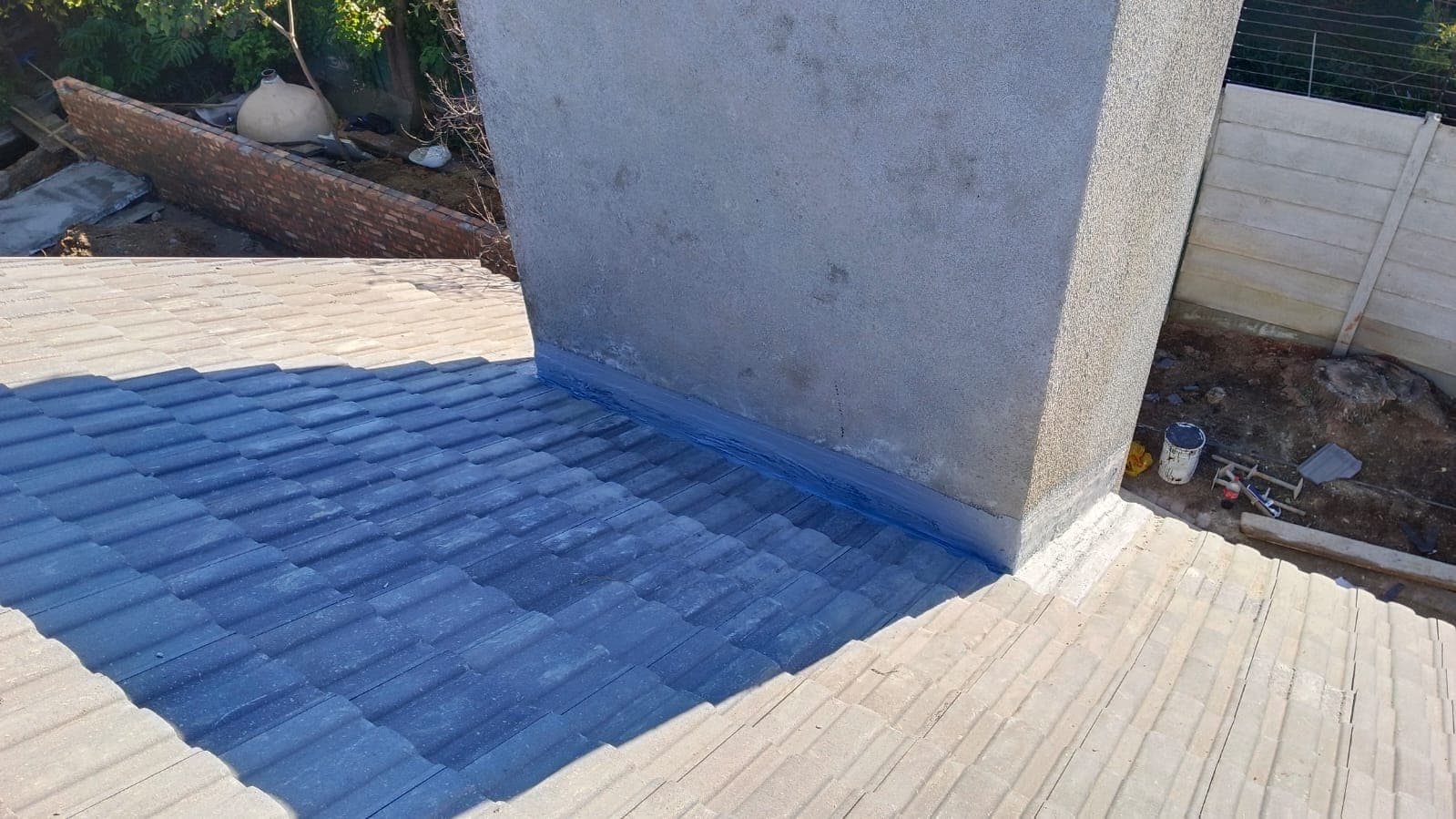
The system that lasts: chimney rebuilds with Uniflash + rubberized topcoats, pitched-roof coatings preceded by a thorough pressure clean.
The enemy: less rainfall but extreme summer heat that cooks coatings within a season.
The system that lasts: UV-stable rubberized waterproof paint (two coats, properly primed), torch-on for any flat surface that ponds.
The enemy: unrelenting wind off the bay, combined with salt mist and sand.
The system that lasts: full perimeter polyurethane sealing on every door and window, plus a rivet-sealing pass on metal roofs.
| Suburb cluster | Primary system | Secondary system |
|---|---|---|
| Atlantic Seaboard | Uniflash flashing | Rubberized topcoat |
| City Bowl | Parapet Uniflash | Torch-on slabs |
| Southern Suburbs | Chimney re-flash | Pitched-roof coating |
| Northern Suburbs | Rubberized roof coat | Torch-on slabs |
| Coastal North | Polyurethane sealing | Flashing re-detail |
If you can already see a damp patch on your ceiling, you've waited too long. By the time water shows up internally, it has already saturated insulation and started rotting timber. The right time to act is before the next winter cold front — typically a March or April booking for the May–August storm season.
Live in Cape Town and worried about your roof? Send us a few photos via WhatsApp. We'll tell you honestly whether you need urgent work, a planned repair, or nothing at all.