Why Heritage Homes Need a Different Approach
Walk through the historic core of Stellenbosch, Franschhoek or Paarl and you're surrounded by buildings that have stood for 150-300 years. They've outlasted modern construction because they were built with lime plaster, breathable substrates and steeply pitched thatch - all of which fail badly when treated with the wrong waterproofing system.
We've seen R200,000+ worth of damage caused by well-intentioned contractors slapping modern impermeable membranes onto Cape Dutch walls. Trapped moisture wrecks the lime, rots the embedded timber, and the plaster sheets off in winter.
This guide is for homeowners of:
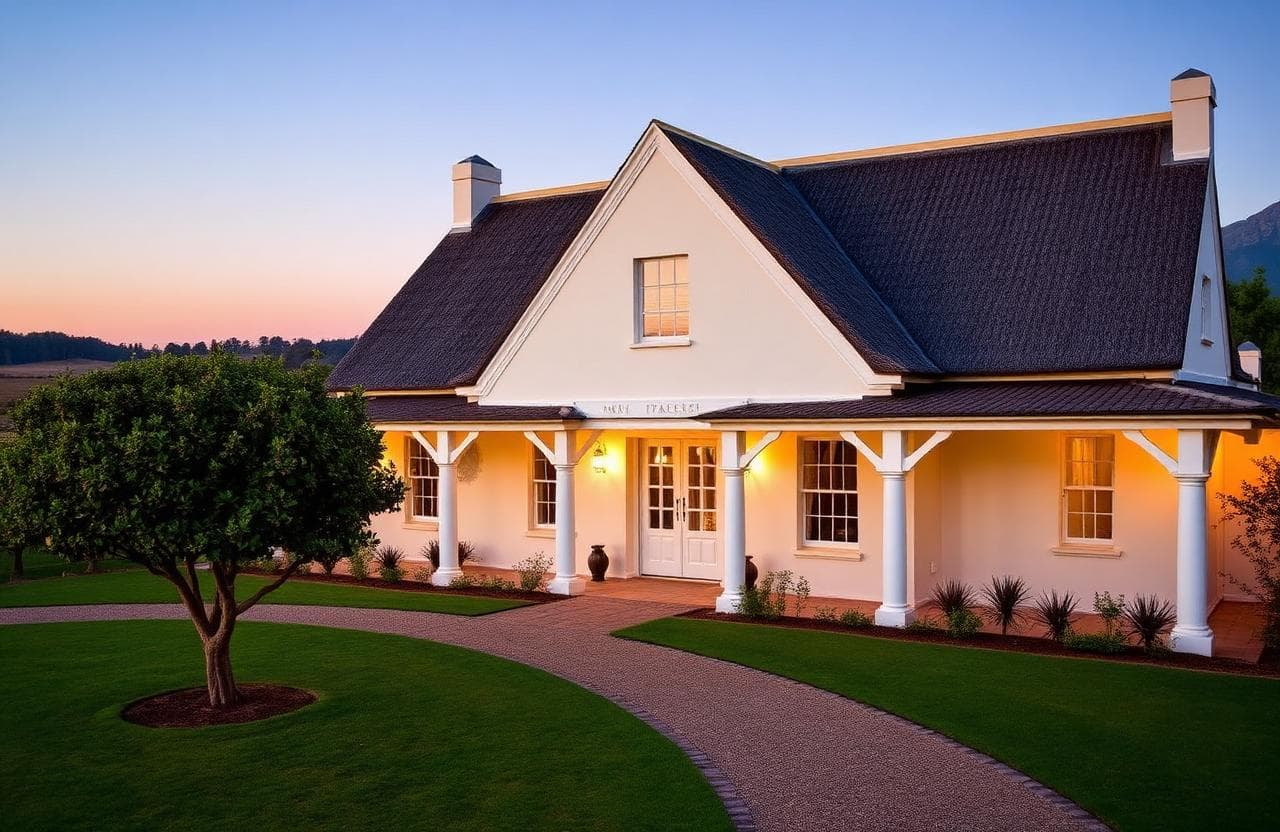
- Cape Dutch homesteads (whitewashed, gabled, thatched - 1700s-1850s)
- Victorian and Edwardian homes in the Stellenbosch CBD, Mostertsdrift and Die Boord (1880s-1920s)
- Heritage-protected farms in the winelands
- Restored modern homes built with traditional materials
The Golden Rule: Breathability
Modern waterproofing systems are designed to be impermeable - to stop water both ways. That's perfect for concrete, but disastrous for traditional construction.
A Cape Dutch wall is meant to breathe. Groundwater wicks up, evaporates out, and the lime plaster repairs micro-cracks chemically as it carbonates. Seal it with PU or acrylic and:
- Moisture is trapped behind the membrane
- Salts crystallise under the coating, blowing it off in sheets
- The clay-and-stone core stays permanently wet
- Embedded oak beams begin to rot from the inside
- Within 2-3 years you have far worse damage than you started with
The right products for heritage walls are breathable: mineral silicate paints (Keim), siloxane-based water repellents (Stormdry), lime-based renders and traditional limewash. These let water vapour out while keeping liquid water from getting in.
The Five Trouble Spots on Cape Dutch Homes
| Element |
Common Failure |
Correct Approach |
| Gable apex |
Lime plaster cracks at the highest exposure point |
Re-render in NHL 3.5 lime, finish with limewash or silicate |
| Thatch-to-wall junction |
Tar-and-rope sealants harden and crack |
Lead or copper flashing dressed into wall - see flashings & joints |
| Window heads & cills |
Concrete cills replaced incorrectly trap water |
Restore original sandstone or cast new lime-aggregate cills |
| Damp-proof course |
Was never installed - rising damp from below |
Chemical DPC injection with salt-resistant lime replaster |
| Lower wall (bottom 1m) |
Rising damp visible as tide-mark |
Same chemical DPC approach - covered in our damp walls Cape Town guide |
Thatch Roof Waterproofing
Thatch itself isn't waterproofed - it sheds water by design. What needs sealing is every junction between thatch and another material:
- Thatch to gable wall
- Thatch to chimney (see chimney waterproofing)
- Thatch valley intersections
- Thatch to dormer windows
We use lead or coated copper flashings, dressed into the wall with proper chases and pointed with NHL lime mortar - never silicone or polyurethane sealant, which both fail on lime substrates within 2-3 years.
If your thatch is over 20 years old, we'll also recommend a fire-retardant treatment (Magma Firestop or Thatchsafe) as part of any waterproofing project. Cape winelands insurers increasingly require it.
What's Legally Restricted
Anything older than 60 years is automatically protected under the National Heritage Resources Act, even if it's not formally listed. This means:
- You cannot alter the external appearance without a permit
- Visible cementitious renders are usually rejected
- Concrete tiles replacing thatch require Heritage Western Cape approval
- Modern dark-coloured paints on whitewashed walls require approval
In practice, this means the waterproofing must be invisible. Our heritage installations use limewash and silicate paints that look indistinguishable from traditional finishes, and flashings in patinated lead that age into the building rather than standing out.
What a Proper Heritage Survey Includes
Before quoting on a Cape Dutch or Victorian home, we run a 90-minute heritage survey - similar to our Stellenbosch waterproofing inspections but with extra steps:
- Moisture readings at 5 wall heights (every 200mm from skirting to ceiling)
- Salt analysis - nitrates vs chlorides vs sulphates determine the system
- Visual lime plaster assessment (powdery, hollow, sound)
- Photo record of every elevation for the permit application (if needed)
- Thatch condition and ridge assessment if applicable
- Below-ground inspection at the wall foot
The survey fee (R2,800-R4,200 depending on size) is credited back if you proceed with the works.
Indicative Heritage Project Costs
These are realistic winelands prices for 2026:
| Work |
Typical Cost |
| Heritage survey + written report |
R2,800 - R4,200 |
| NHL 3.5 lime replaster (per m²) |
R780 - R1,150 |
| Chemical DPC injection (per linear m) |
R850 - R1,400 |
| Silicate paint system (3 coats, per m²) |
R220 - R340 |
| Lead flashing replacement (per linear m) |
R650 - R950 |
| Thatch-to-wall junction reseal (per linear m) |
R420 - R680 |
| Full elevation restoration (10m wide) |
R85,000 - R180,000 |
Heritage work costs roughly 2-3× a modern equivalent - because the materials are slower, the labour is specialised, and there's no shortcut that doesn't damage the building.
Why It's Worth Doing Right
A correctly waterproofed Cape Dutch homestead will outlast all of us. A badly waterproofed one will need its lower 1.5m of wall completely rebuilt within 5-10 years.
Insurance valuations on properly restored heritage homes in Stellenbosch and the winelands have appreciated faster than the wider Cape Town market for the last decade. The waterproofing system you choose now is part of that long-term value.
Request a heritage waterproofing assessment and we'll come out, document your home, and propose a system that protects both the structure and the historical character. We've worked on listed homes from Dorp Street to Vrede en Lust - we know what passes Heritage Western Cape and what doesn't.