Damp Walls in Cape Town Homes: Causes, Costs & Permanent Fixes
Learn how to tell rising damp from penetrating damp, what each repair really costs in Cape Town, and the waterproofing systems that stop it coming back.

Jun 02, 2026
Guides
Guides
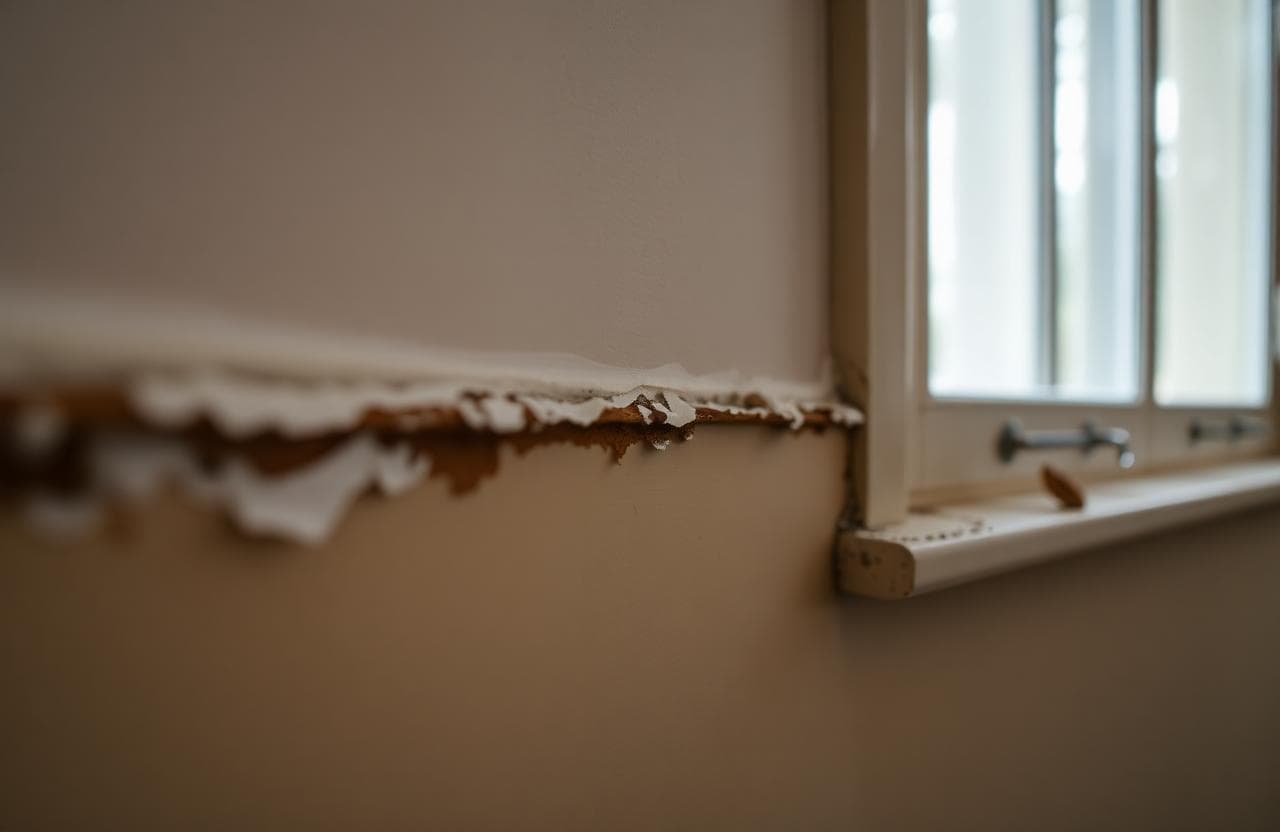
If you live anywhere from Sea Point to Stellenbosch, you've probably seen it: a tide-mark on a skirting board, bubbling paint behind the couch, or that musty smell after a wet weekend. Damp walls are the single most common waterproofing complaint we get across the Western Cape - and almost every case comes down to one of three causes.
| Type of Damp | Where It Appears | Telltale Sign |
|---|---|---|
| Rising damp | Bottom 1m of ground-floor walls | Horizontal tide-mark, salt crystals |
| Penetrating damp | Anywhere - often mid-wall | Localised patch worst after rain |
| Condensation | Cold corners, behind furniture | Black mould, no clear water source |
Get the diagnosis wrong and you'll spend money on the wrong fix. We see this every winter - a homeowner repaints with "damp-proof paint", the problem returns in 8 weeks, and the underlying cause keeps eating the plaster.
Rising damp happens when groundwater is wicked up through porous brickwork because the damp-proof course (DPC) has failed or was never installed. Most pre-1970s Cape Town homes - especially in the City Bowl, Observatory, Woodstock and parts of Stellenbosch - either have a perished bitumen DPC or none at all.
You almost certainly have rising damp if:
The permanent fix: a chemical DPC injection combined with replastering using a salt-resistant render. Expect R650-R1,200 per linear metre in Cape Town, depending on wall thickness. Cheaper "paint-on" damp solutions are a waste of money for true rising damp - they trap moisture and push the problem higher up the wall.
Penetrating damp is water getting through the wall from outside, not up from below. In Cape Town this is overwhelmingly caused by:
The dead giveaway: the damp patch matches a specific external feature - directly under a window, next to a downpipe, against a parapet wall - and it gets dramatically worse during wind-driven rain.
The permanent fix depends on the source. Re-bedding flashings, re-pointing brickwork, or applying a breathable masonry cream like Stormdry typically runs R3,500-R12,000 for a single elevation. If a parapet is involved, budget for proper torch-on or liquid membrane work on top.
If your "damp" appears as black spotted mould in cold corners, behind wardrobes, or on north-facing windows, and there's no clear water source, it's almost certainly condensation - not a waterproofing failure.
Cape Town's winter pattern of cold nights and poorly ventilated homes is perfect for this. The fix is ventilation and insulation, not membrane work. We'll tell you honestly if that's what we find - there's no point selling you a waterproofing system you don't need.
A reliable damp diagnosis takes 30-45 minutes on-site and includes:
This is exactly the process we use for our waterproofing inspections in Cape Town - and it's the only reliable way to avoid spending tens of thousands on the wrong solution.
| Problem | Typical Cape Town Cost |
|---|---|
| Diagnostic damp survey + report | R1,500 - R2,800 |
| Chemical DPC injection (per linear m) | R650 - R1,200 |
| Replaster with salt-resistant render | R450 - R800/m² |
| External masonry cream treatment | R180 - R260/m² |
| Parapet wall waterproofing | R450 - R900/m² |
| Full elevation repaint after damp repair | R12,000 - R35,000 |
Prices are real-world Cape Town ranges for 2026. Always insist on a written scope of works and a minimum 5-year workmanship warranty - which we cover in detail in our guide on what to demand from a waterproofing warranty.
Don't wait for the damp to reach the picture rails. Get a proper diagnosis as soon as you see:
We cover Cape Town, Stellenbosch, Paarl, Somerset West and Hermanus - usually with a same-week site visit. Request a free quote and we'll come out, diagnose the real cause, and quote only the work that actually solves it.